Prices · The 1890s
What a Bicycle Cost in 1895
One spring issue of Munsey’s carried more than a dozen bicycle makers. Read together, their ads lay out the whole market, from a $150 tandem down to $15 for a child’s wheel or a used one.
In April 1895 the bicycle was the most fashionable machine in America, and the advertising pages of Munsey’s Magazine show it. More than a dozen cycle makers bought space in that one issue, along with sellers of tires, saddles, cyclometers and bicycle stands. Most of them printed their prices, which means that a reader paging through the magazine could see the entire bicycle market of 1895 laid out like a catalog.
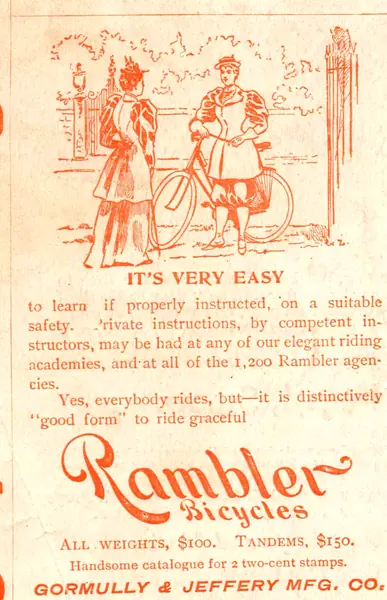
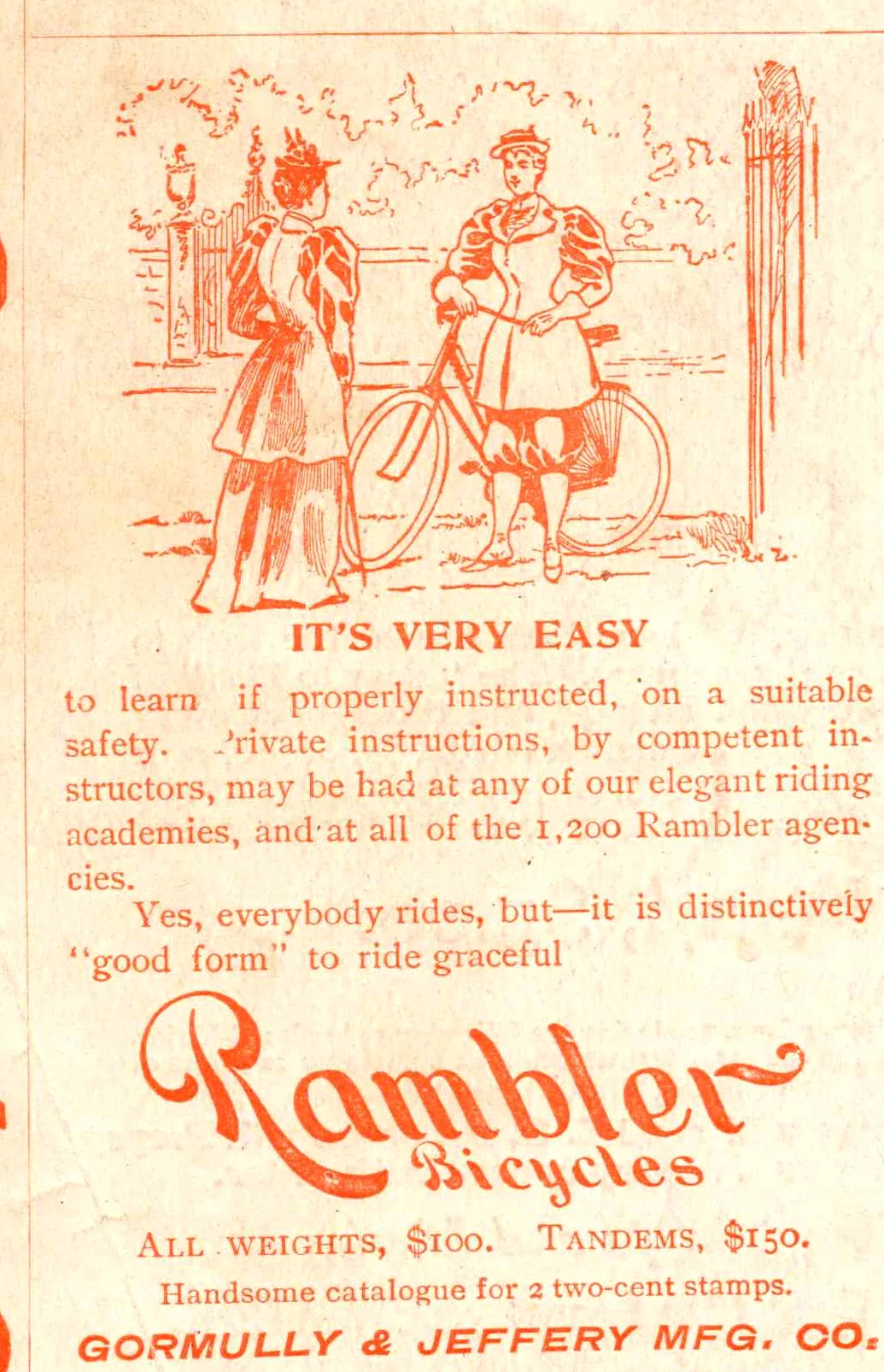
The Rambler ad set the tone. Learning to ride was easy, it said, at any of the company’s riding academies or its 1,200 agencies, and then it added a line about class:
Yes, everybody rides, but—it is distinctively “good form” to ride graceful Rambler Bicycles.
Gormully & Jeffery Mfg. Co., April 1895
The price was printed underneath: all weights, $100. Tandems, $150.
The Rambler was made by Gormully & Jeffery of Chicago, which had been building bicycles since the late 1870s and was one of the best-known names in the business. Thomas B. Jeffery, one of the partners, had invented the clincher rim, a way of seating a tire in the wheel that was used on bicycles and early automobiles.5 The ad lists branches in Boston, Washington, New York, Brooklyn and Detroit and one in Coventry, England, and it sold more than bicycles. Riding was still a skill that many adults lacked, so the company offered private lessons at its riding academies and its 1,200 agencies. A buyer learned to ride from the same people who sold the machine.
The hundred-dollar standard
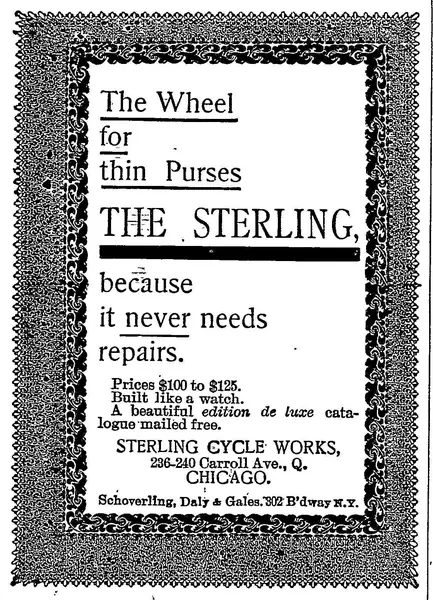
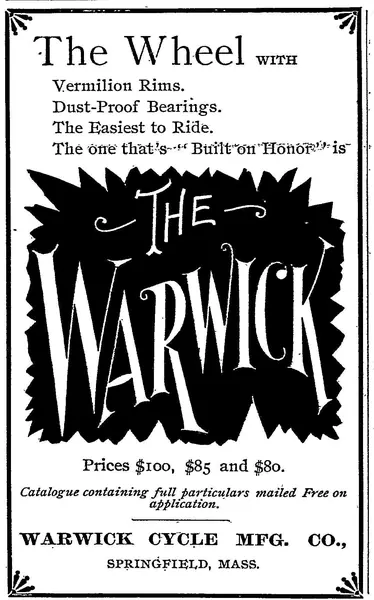
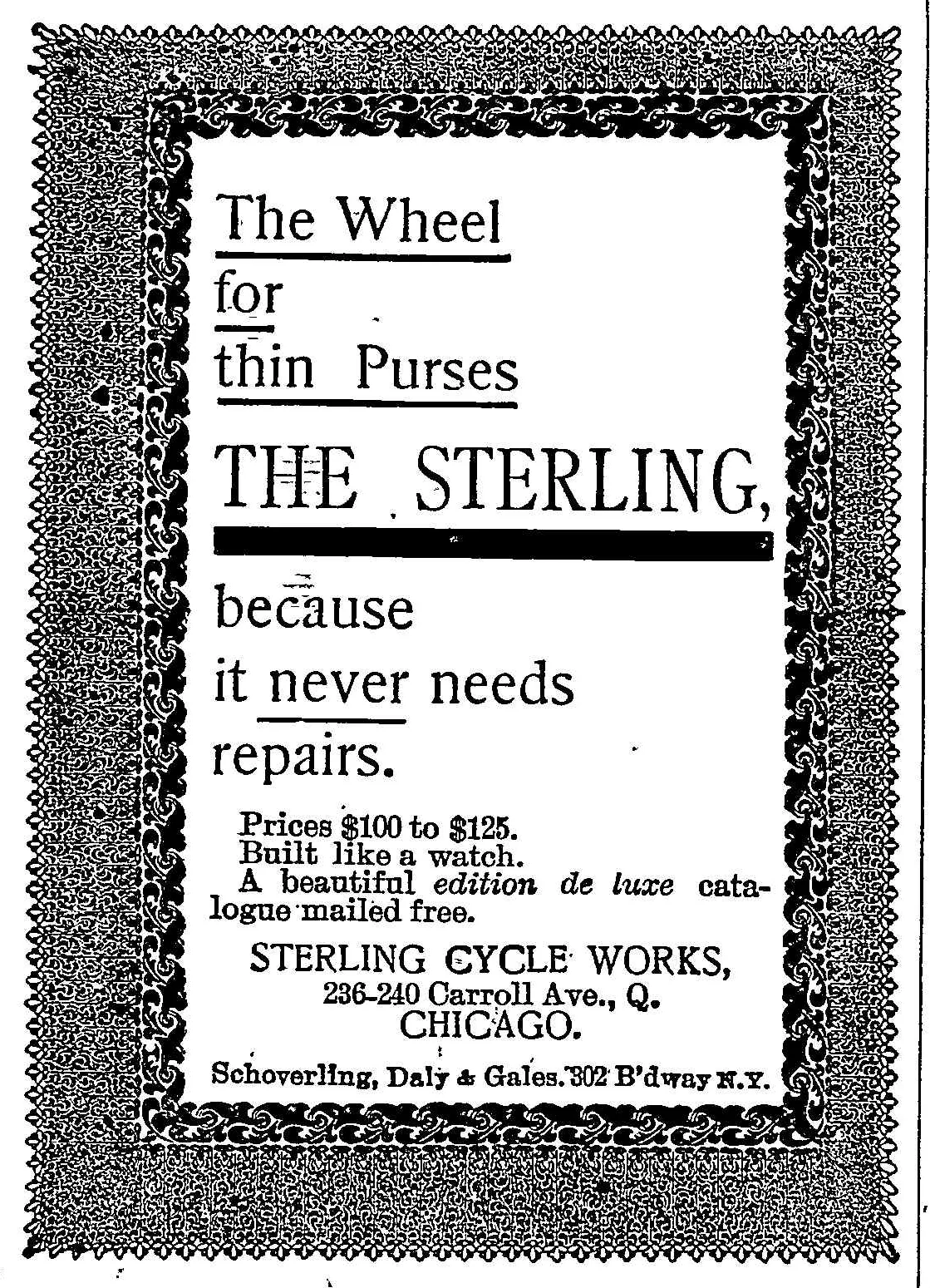
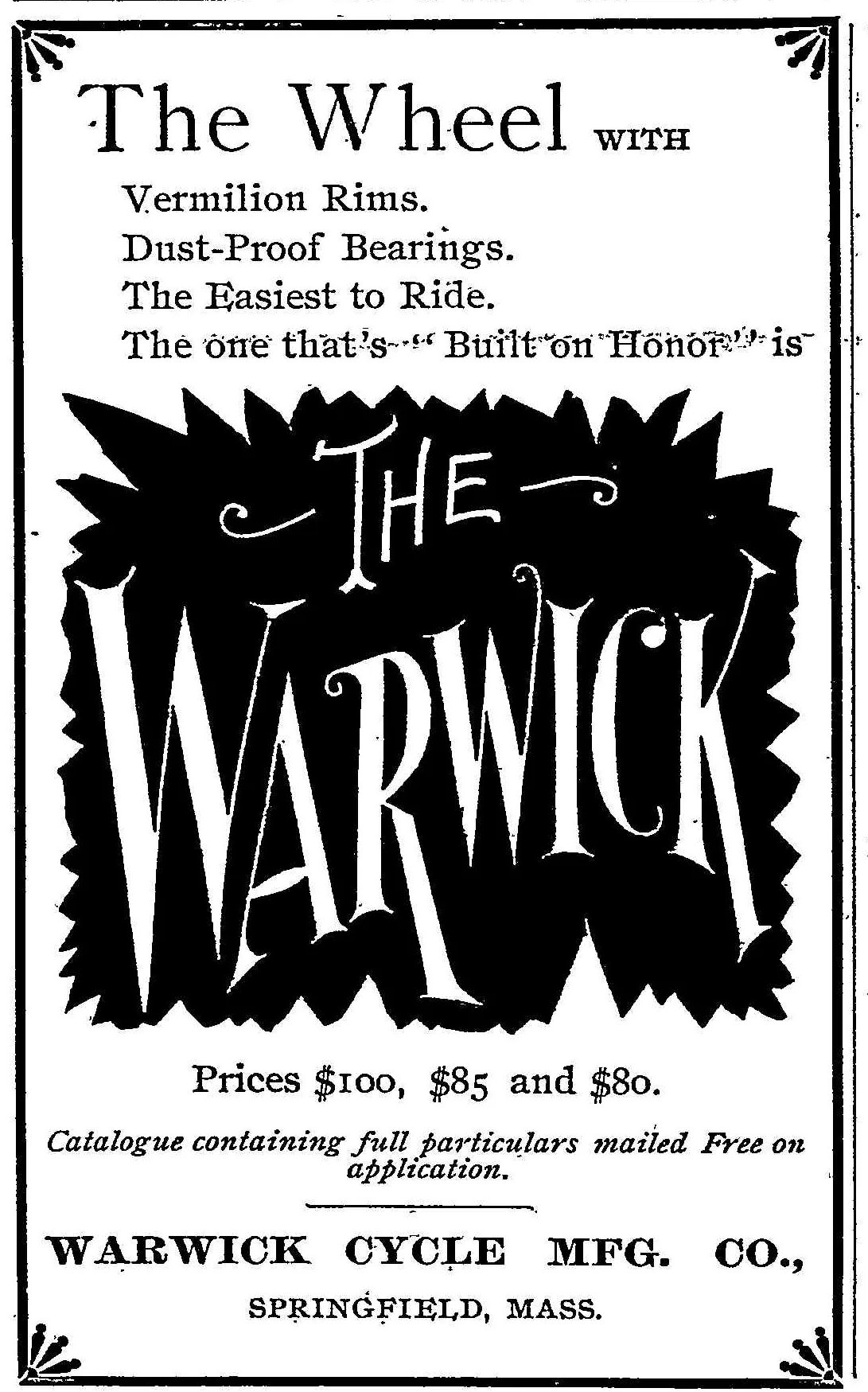
A hundred dollars was the price of a first-class wheel, and the best-known makers clustered around it. The Sterling of Chicago, “built like a watch,” cost $100 to $125, and its headline called it, without obvious irony, The Wheel for thin Purses, because “it never needs repairs.” The Warwick of Springfield, Massachusetts, with its vermilion rims, came at $100, $85 and $80.
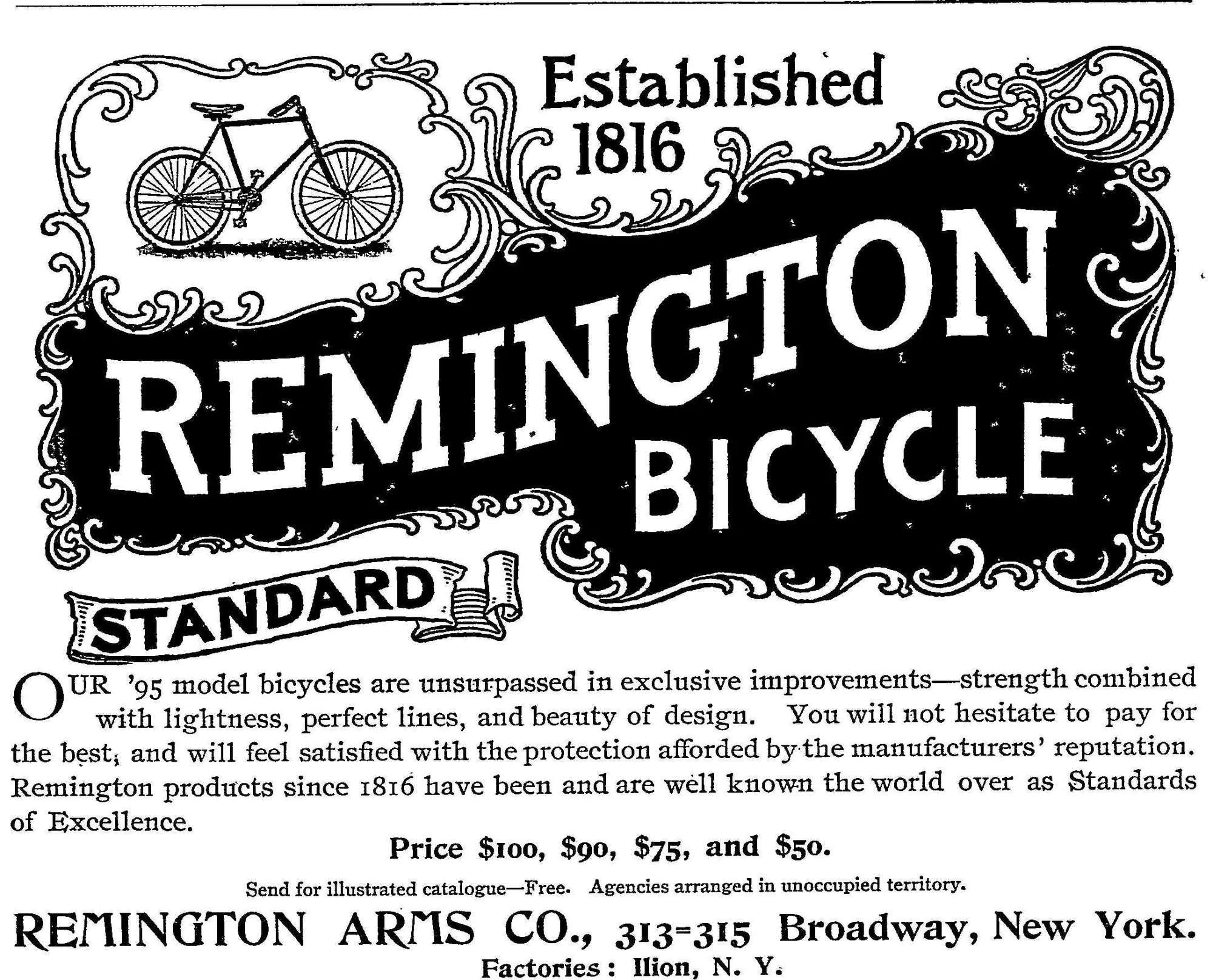
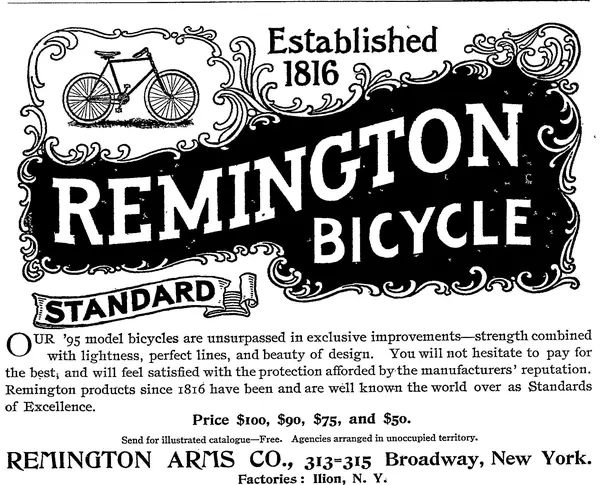
Remington Arms, the gunmaker, sold bicycles too, and it leaned on its history: Established 1816. Its ’95 models ran from $100 down to $50, and the copy asked the reader to trust the name. “You will not hesitate to pay for the best,” it said, “and will feel satisfied with the protection afforded by the manufacturers’ reputation.”
Just under a hundred
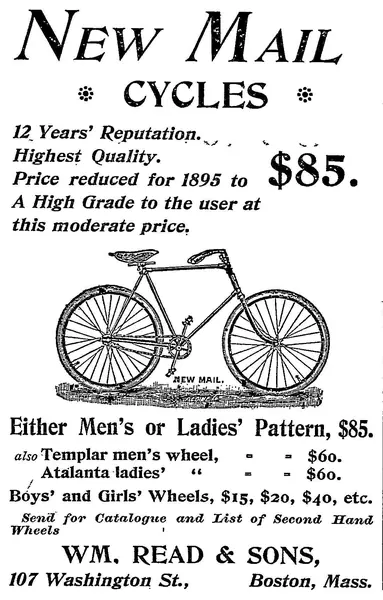
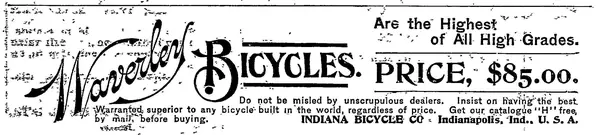
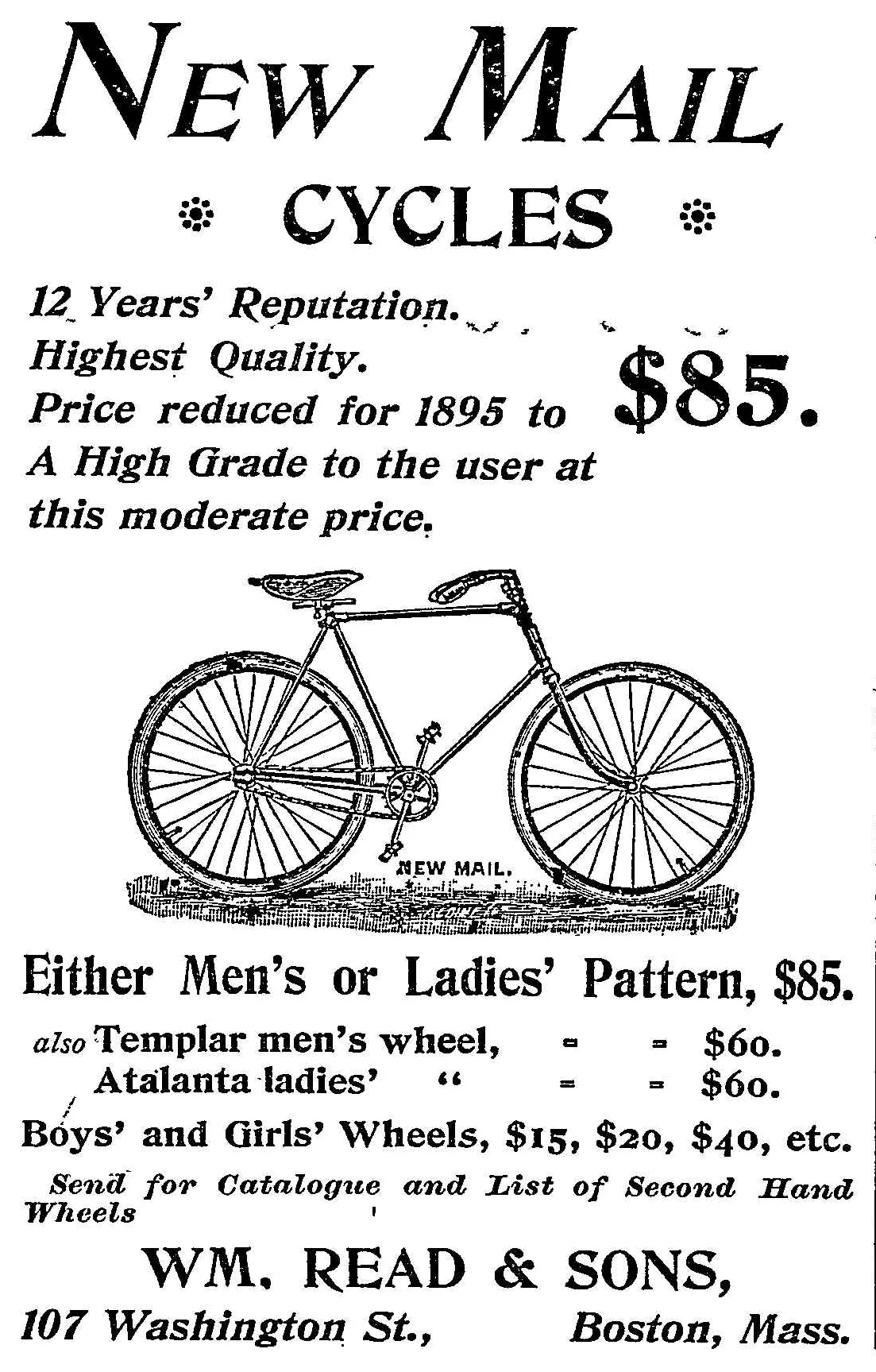
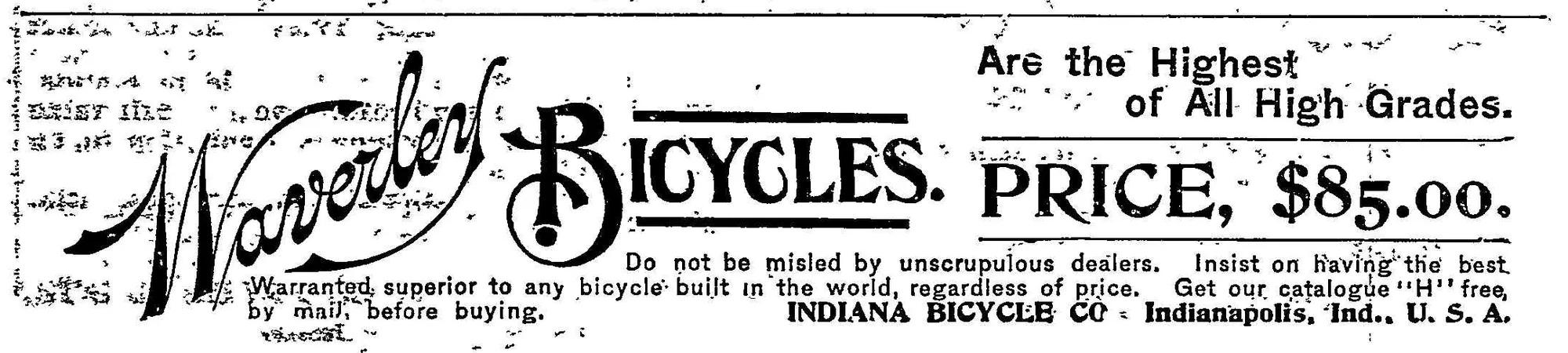
The next tier down sold the same promise for less. The New Mail of Boston was “price reduced for 1895 to $85,” for men’s or ladies’ patterns, with cheaper Templar and Atalanta models at $60 and children’s wheels from $15. The Waverley of Indianapolis also cost $85, and it was blunt about the competition: “Warranted superior to any bicycle built in the world, regardless of price.”
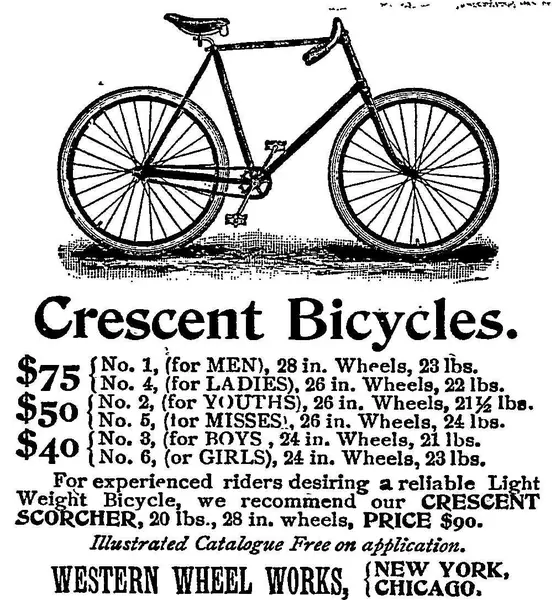
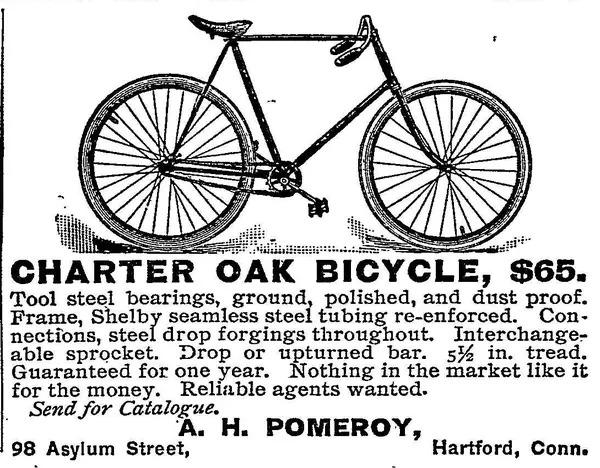
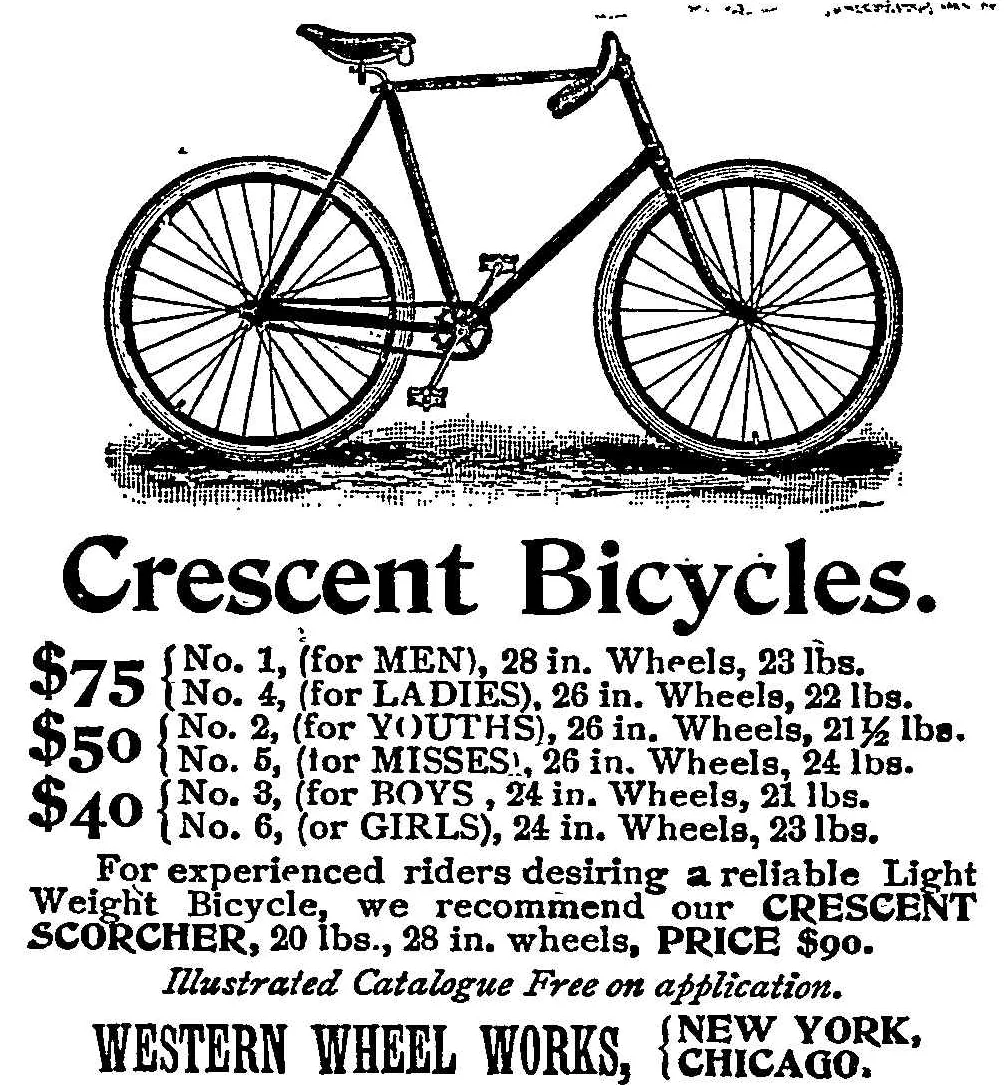
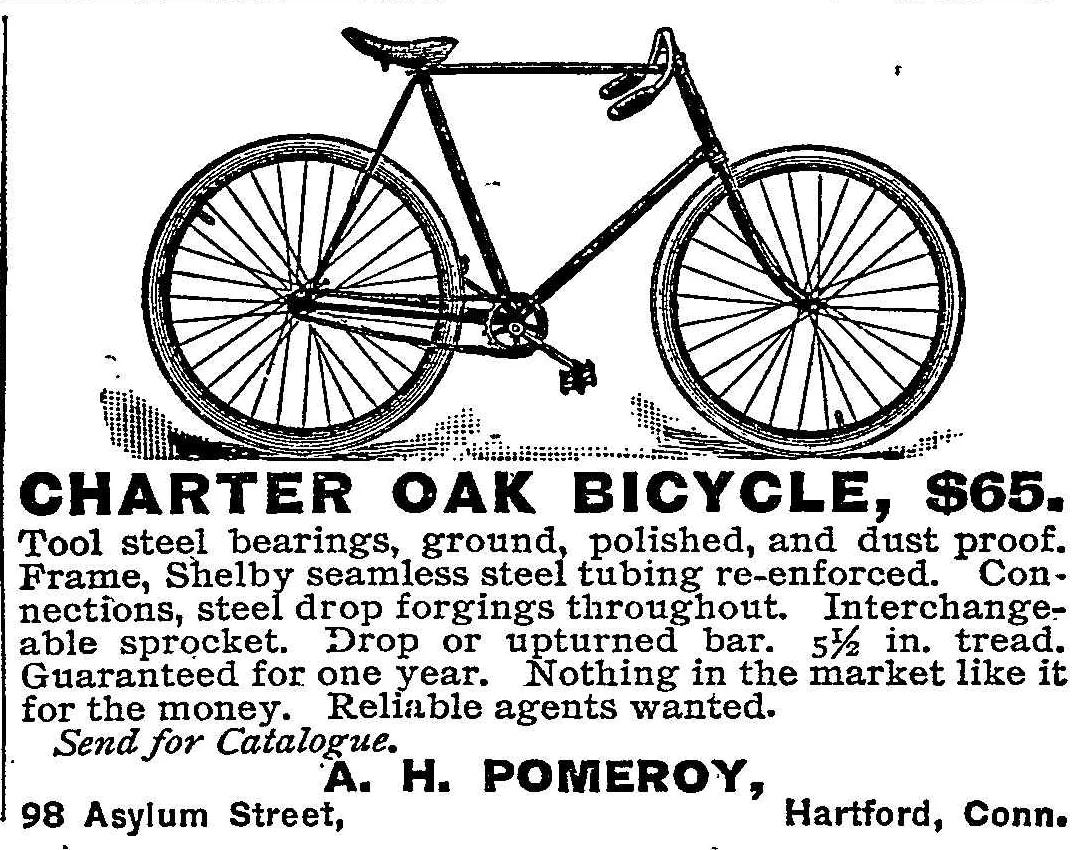
Western Wheel Works priced its Crescent bicycles by size: $75 for men’s and ladies’ models, $50 for youths and misses, $40 for boys and girls. A. H. Pomeroy of Hartford sold the Charter Oak for $65 and listed what the money bought: tool-steel bearings, seamless tubing, drop forgings, a one-year guarantee.
Selling against the standard
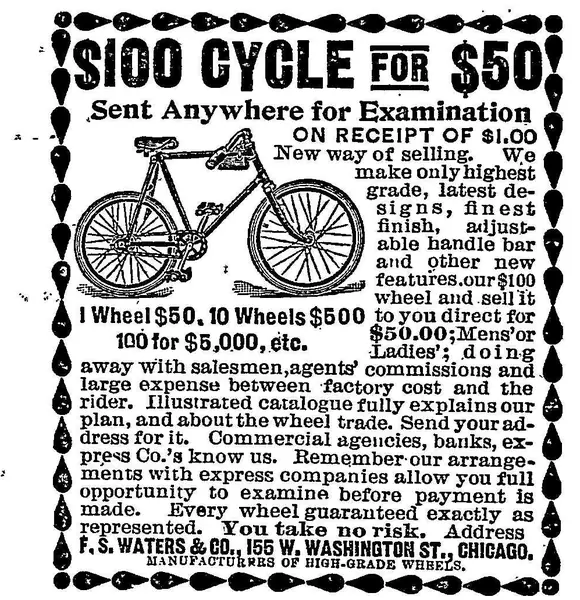
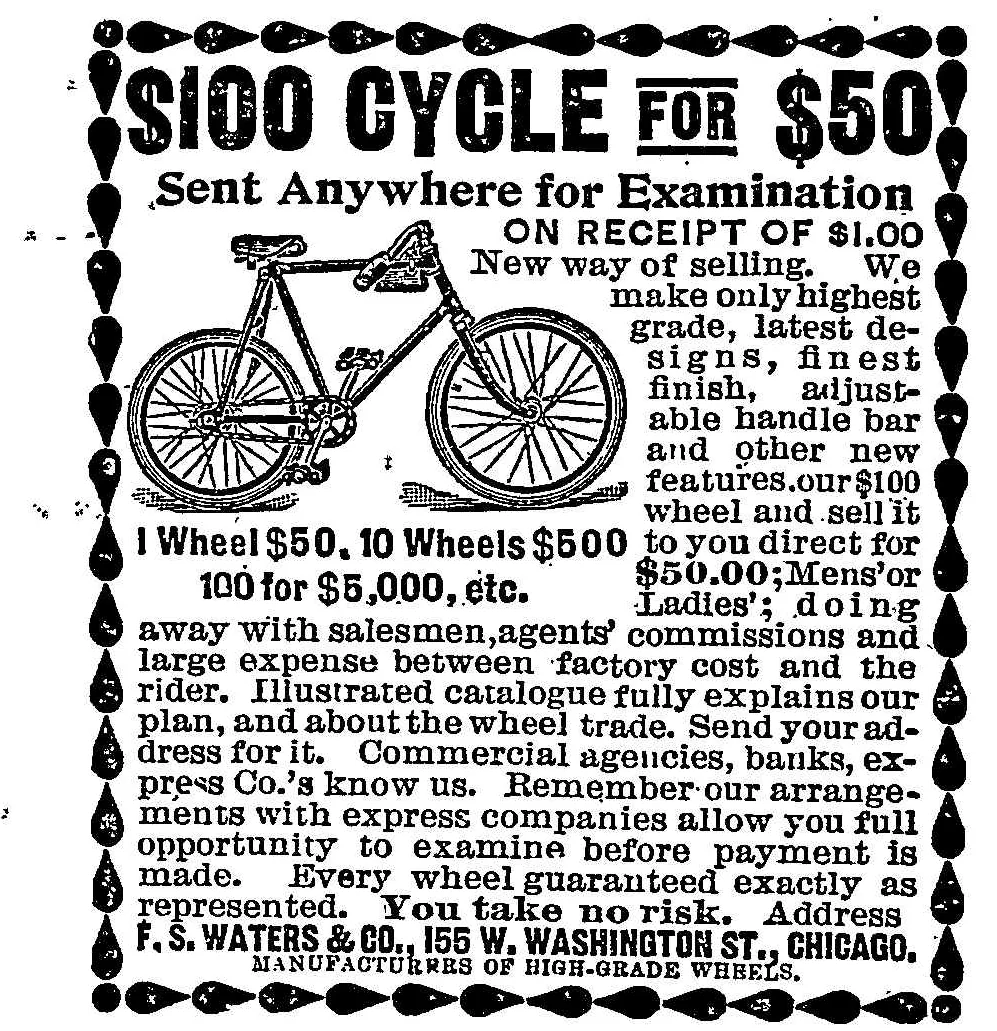
Then came the price-cutters, and they are the most revealing ads in the issue. F. S. Waters & Co. of Chicago ran the headline $100 Cycle for $50 and explained how: by selling direct, “doing away with salesmen, agents’ commissions and large expense between factory cost and the rider.” It would ship a wheel anywhere for examination on receipt of a dollar, and it printed a price table that offered no discount at all: “1 Wheel $50, 10 Wheels $500, 100 for $5,000.”
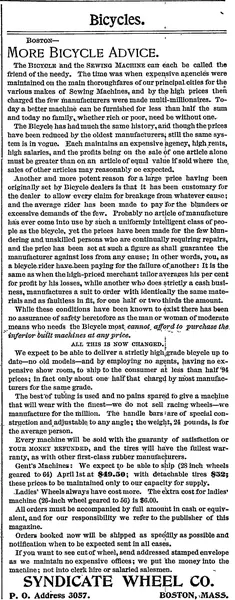
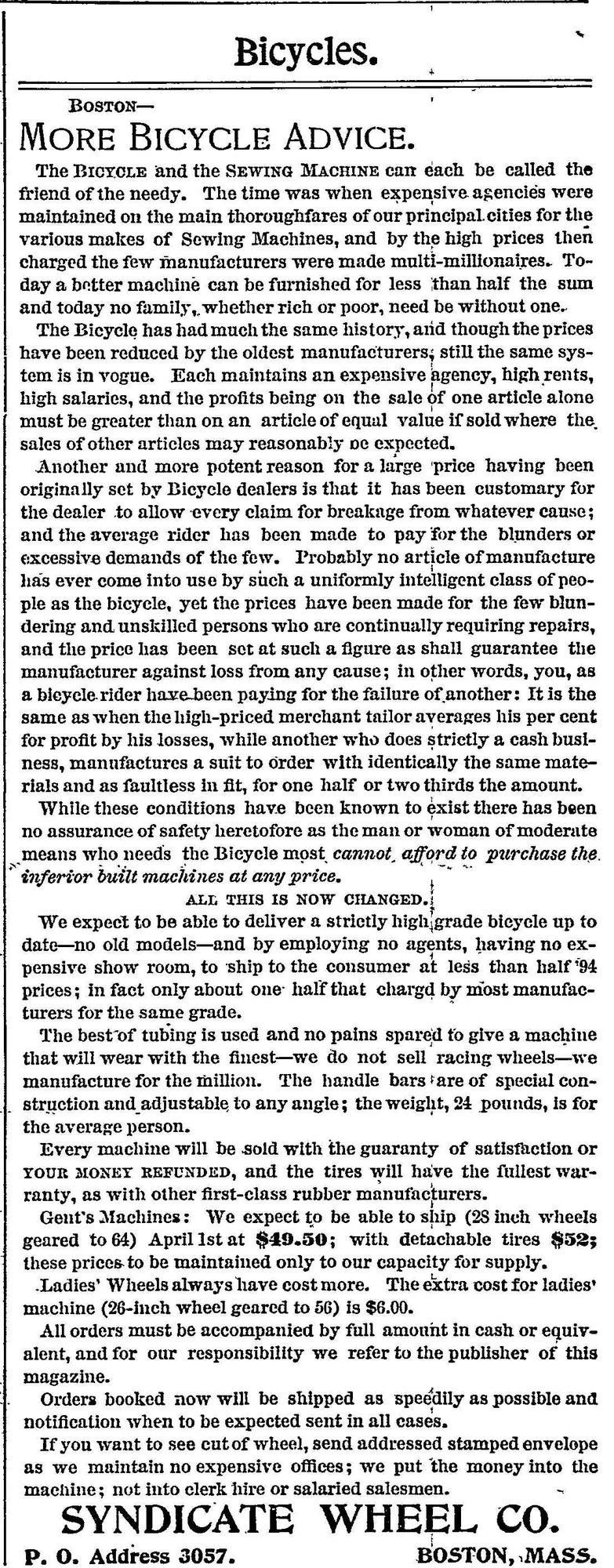
The Syndicate Wheel Co. of Boston made the argument at length. The bicycle, it wrote, was following the path of the sewing machine, once sold through expensive city agencies and now cheap enough for any family.
The BICYCLE and the SEWING MACHINE can each be called the friend of the needy.
Syndicate Wheel Co., April 1895
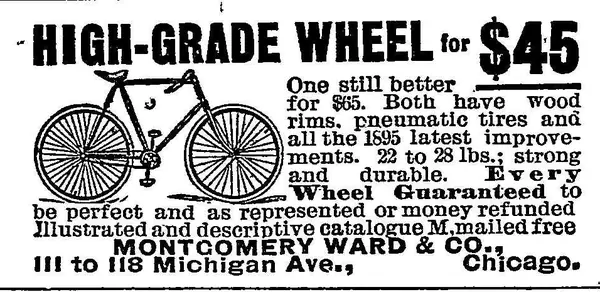
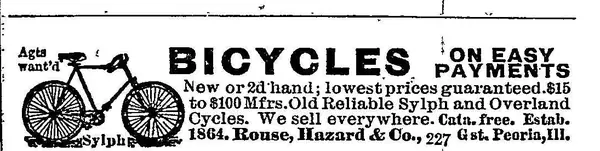
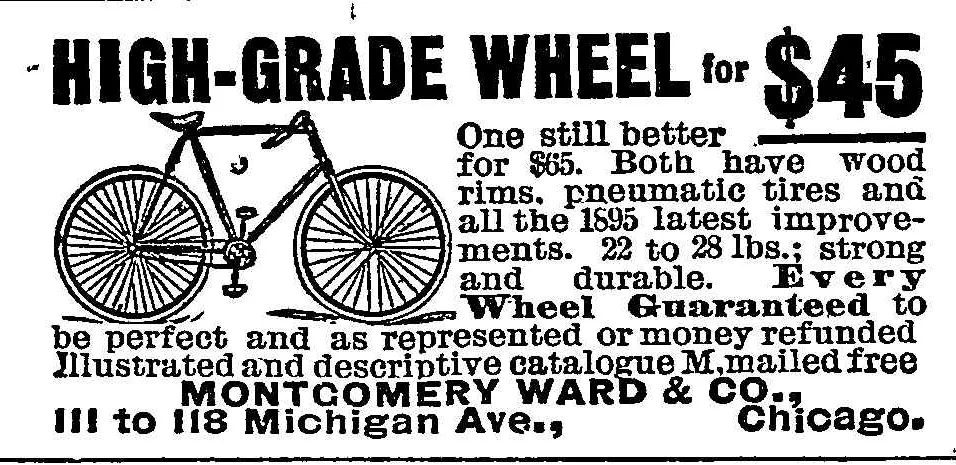
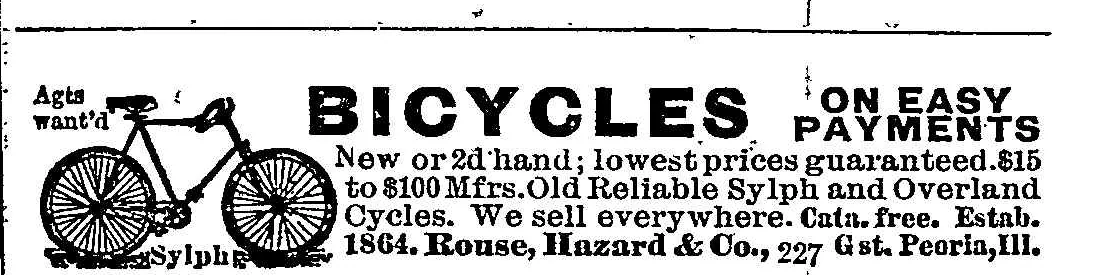
Its men’s machine was $49.50. Montgomery Ward, the Chicago mail-order house, offered a “high-grade wheel for $45” and a better one for $65, both with wood rims and pneumatic tires, “guaranteed to be perfect and as represented or money refunded.” Rouse, Hazard & Co. of Peoria sold new and second-hand bicycles from $15 to $100, on easy payments.
So the $100 bicycle was real, but it was already a brand, not a law. In the same issue, readers could buy a wheel for half that from anyone willing to cut out the dealer.
Here is the whole market in that one issue, using the advertisers’ own prices.
| Tier | Make and maker | Price in the ad |
|---|---|---|
| Top of the line | Rambler, Gormully & Jeffery, Chicago | $100; tandem $150 |
| Sterling, Chicago | $100–$125 | |
| Remington, Ilion, N.Y. | $50–$100 | |
| Warwick, Springfield, Mass. | $80, $85, $100 | |
| Just under $100 | Crescent Scorcher, Western Wheel Works | $90 (20 lbs., for experienced riders) |
| New Mail, Boston | $85, men’s or ladies’ | |
| Waverley, Indianapolis | $85 | |
| Crescent, men’s or ladies’ | $75 | |
| Charter Oak, A. H. Pomeroy, Hartford | $65 | |
| Price-cutters | Montgomery Ward, Chicago | $45 and $65 |
| F. S. Waters, Chicago | $50, men’s or ladies’ | |
| Syndicate Wheel Co., Boston | $49.50 (men’s) | |
| Young riders and used wheels | New Mail Atalanta (ladies’) and Templar | $60 |
| Crescent, youths’ and misses’; boys’ and girls’ | $50; $40 | |
| New Mail, boys’ and girls’ | from $15 | |
| Rouse, Hazard & Co., Peoria, new and second-hand | $15–$100 |
What a hundred dollars meant
For most readers, $100 was a great deal of money. The National Bureau of Economic Research puts average hourly earnings in American manufacturing in 1895 at about 14 cents.1 At that rate a $100 bicycle cost roughly 700 hours of work. Factory hands then worked about 60 hours a week, ten hours a day for six days, so a full week paid about $8.50.6 The $100 Rambler was about twelve weeks of wages, close to three months. The $45 Montgomery Ward wheel was a little over five weeks, and a $150 tandem more than four months. These are averages for wage earners in manufacturing; many readers of a middle-class magazine like Munsey’s earned more, and many working people earned less. The Æolian roll-playing organ advertised in the same issue started at $210 (see A Parlor Orchestra for $210).
That is why so many of these ads offer catalogs, agencies, payment plans and second-hand lists. The bicycle was a luxury that a great many people wanted, and the industry was racing to make it something they could afford.
“Men’s or ladies’”
Look again at the price lists and a small phrase keeps appearing: men’s or ladies’. New Mail sold either pattern at $85. Crescent priced its men’s and ladies’ wheels the same, $75, and listed separate models for youths and misses, boys and girls. F. S. Waters offered its $50 wheel in both patterns. The cycle makers were selling to women as a matter of course.
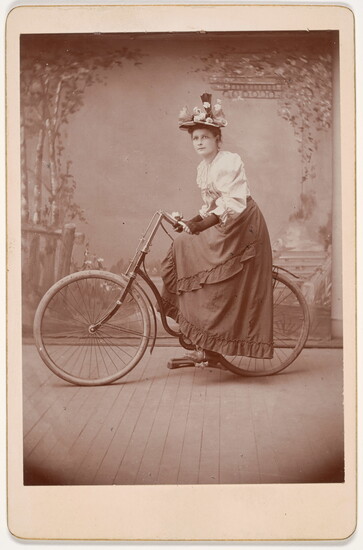
The ladies’ pattern was what made that possible. The safety bicycle of the late 1880s, with two wheels of the same size and a chain drive, could be built with a dropped frame that left room for a skirt.7 Riding still changed what women wore. Some cyclists shortened their skirts to just above the boot top, and dress reformers pushed divided skirts and bloomers, which many riders thought too daring.7 More than clothing, the bicycle gave a woman a way to go somewhere on her own. In February 1896 Susan B. Anthony told the reporter Nellie Bly that bicycling had “done more to emancipate women than anything else in the world.”8
Good roads
Wherever riders went, they ran into the same problem: American country roads were terrible. Cyclists, organized in the League of American Wheelmen since 1880, became the loudest voice for better ones, and bicycle makers, led by Albert Pope of Columbia, backed the campaign. They argued to farmers that bad roads cost them money every time they hauled a crop to market.9
The campaign worked faster than anyone might have expected. In 1893 Congress gave the Department of Agriculture $10,000 to study roads, and on October 3 of that year the department opened the Office of Road Inquiry. It had no money to build anything; its job was to gather information and spread the word about good road-building. But it was the first federal roads agency, and it grew into today’s Federal Highway Administration.910 When automobiles arrived a few years later, the roads movement the cyclists had started was waiting for them.
The bust
It worked, and then it overshot. Prices fell through the rest of the decade. In Minnesota, the state historical society notes, Minneapolis dealers in 1898 were advertising basic models for thirty dollars.2 More than five hundred companies had piled into the business, and by the late 1890s there were far more bicycles than buyers. In 1899 Albert Pope led dozens of manufacturers into a new combination, the American Bicycle Company, meant to control supply and end the price war. It lasted only until 1903.4 As American Heritage put it, the bicycle delirium had all but burned out by 1900.3
The two companies at the top of this story found their way out. Thomas Jeffery sold his share of Gormully & Jeffery to the American Bicycle Company, and in December 1900 he paid $65,000 for a factory in Kenosha, Wisconsin. It was the old works of the Sterling bicycle company, the maker that had promised a wheel “built like a watch.” There, from 1902, he built automobiles, and he kept the old bicycle name: they were Ramblers.511 The Jeffery company became Nash Motors in 1917, and the Rambler name lasted on American cars until American Motors dropped it in 1969.12
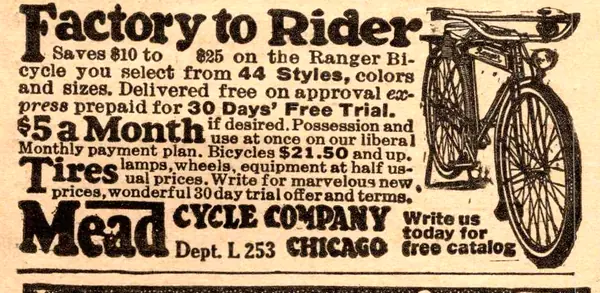
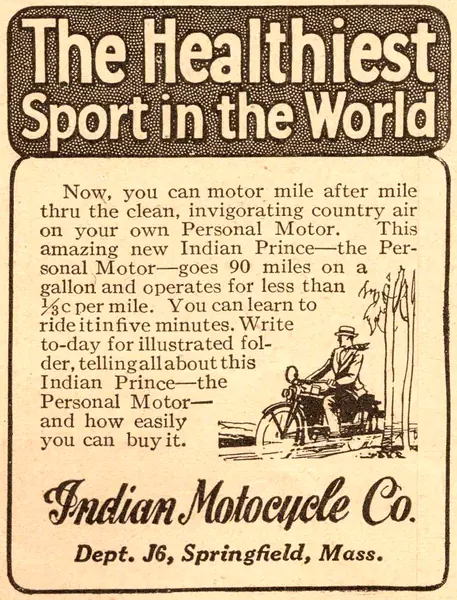
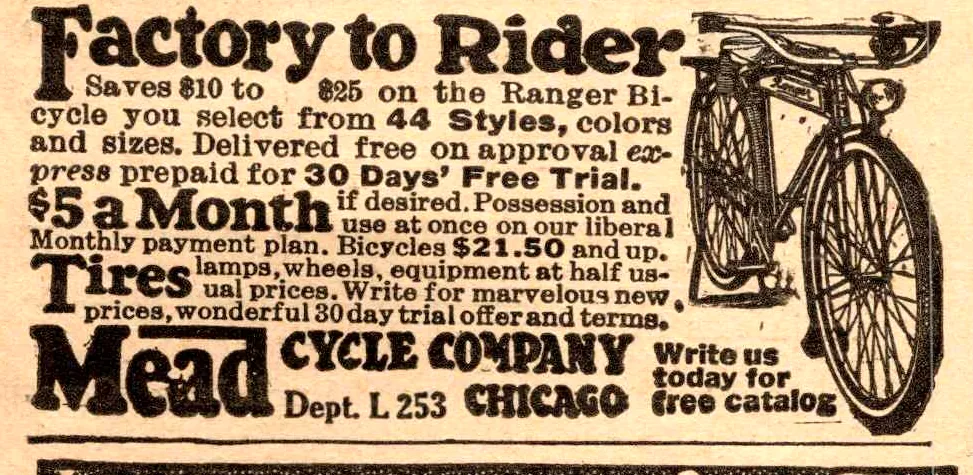
Thirty years later, the bicycle ads in the archive are small and practical. In June 1925, Physical Culture carried the Mead Cycle Company’s Factory to Rider offer: 44 styles of Ranger bicycle, thirty days’ free trial, $5 a month if desired, and prices from $21.50. On another page, the Indian Motocycle Co. was selling what the bicycle had once been, the thrill of personal speed, now with an engine: the Indian Prince, a “Personal Motor” that went ninety miles on a gallon.
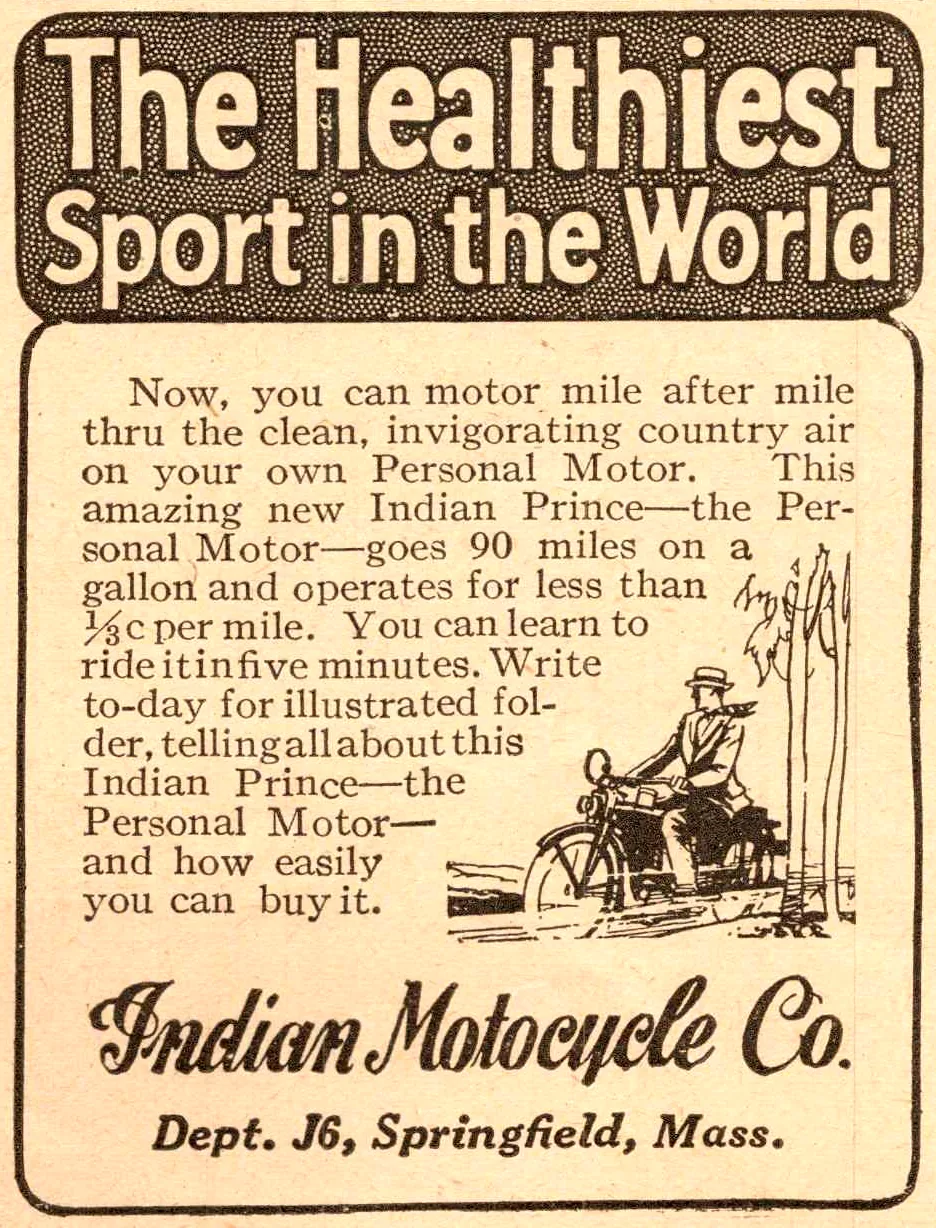
The 1895 ads capture the moment just before that change, when a bicycle was still worth a season’s savings and the people selling it were already arguing about what it should really cost.
Sources
- Average Hourly Money Earnings in Payroll Manufacturing Industries for the United States, NBER Macrohistory Database, via FRED.
- Bicycling Craze, 1890s, MNopedia, Minnesota Historical Society.
- The Great Bicycle Delirium, American Heritage.
- American Bicycle Company, Wikipedia.
- Thomas B. Jeffery and Thomas B. Jeffery Company, Wikipedia.
- Robert Whaples, “Hours of Work in U.S. History”, EH.Net Encyclopedia.
- Anya Jabour, “How Bicycles Liberated Women in Victorian America”, Commonplace: The Journal of Early American Life.
- Nellie Bly, “Champion of Her Sex: Miss Susan B. Anthony,” New York World, February 2, 1896, p. 10.
- “Portrait of a General: General Roy Stone” and related highway-history pages, Federal Highway Administration; “Our Nation’s Highways: Beginnings to Today”, FHWA.
- General Roy Stone, 1893–1899, Federal Highway Administration, Past Administrators.
- Sterling Bicycle Works, Kenosha, 1895, University of Wisconsin Digital Collections (“Built like a Watch”); Auto Production in Kenosha, historical marker.
- Automobile Manufacturing, Encyclopedia of Chicago.