Then and now · Health & beauty
Thirty Years of Baldness Cures
Put a magazine from 1895 next to one from 1925 and the hair ads have changed almost completely. The promise hasn’t changed at all.
In April 1895, a reader of Munsey’s Magazine worried about a thinning crown would have found a strip of type no wider than a column, headed Free to Bald Heads. The Altenheim Medical Dispensary of Cincinnati promised to “stop falling hair and remove scalp diseases,” and offered to mail free information on how to grow hair upon a bald head. That was the whole ad: no picture, no testimonial, no price.

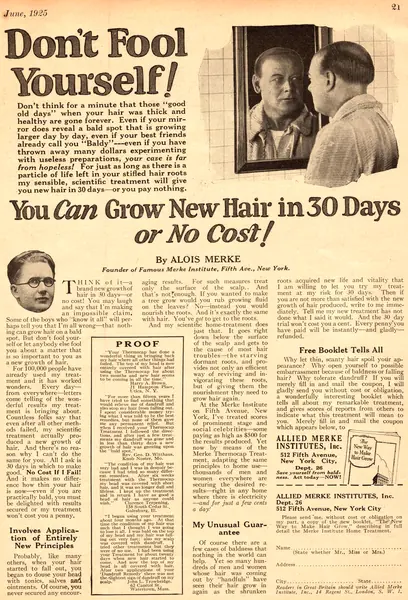
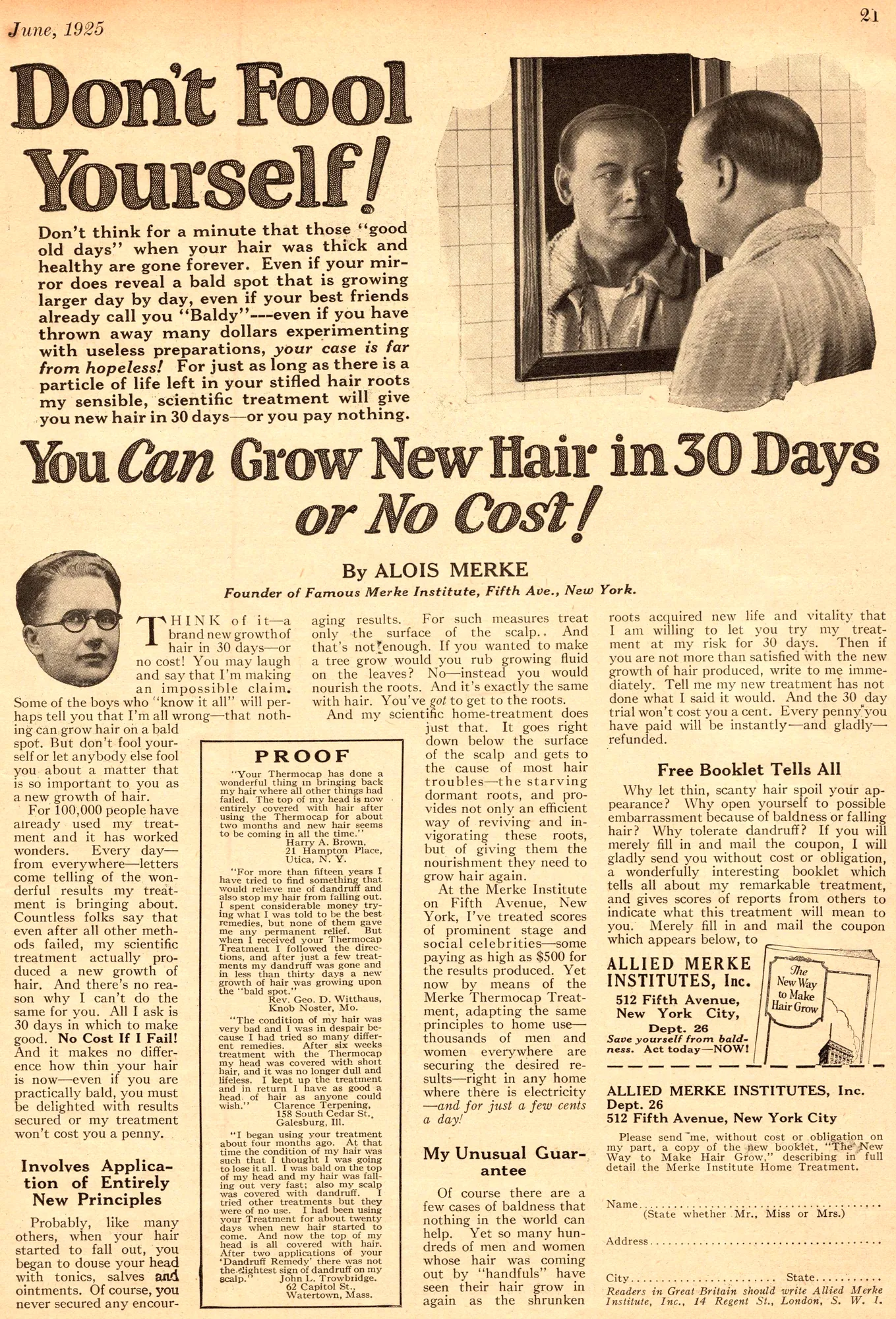
Thirty years later, in the June 1925 issue of Physical Culture, the same worry got a full page. A photograph shows a man studying his bald spot in a hand mirror. The headline tells him Don’t Fool Yourself! Below, Alois Merke, “founder of famous Merke Institute, Fifth Ave., New York,” promises new hair in thirty days or no cost, with a boxed section headed Proof and a coupon for a free booklet.
The archive holds both issues, a generation apart. Comparing them shows how much American advertising changed between the 1890s and the 1920s, and how little the underlying sales pitch did.
One caution before comparing. These are different kinds of magazine. Munsey’s was a ten-cent general monthly read by about half a million people in 1895; Physical Culture was Bernarr Macfadden’s health magazine, bought by readers who were already worried about their bodies.4 A full-page hair ad was a natural fit in the second, and some of the contrast below comes from that. (The same two issues are compared in Breakfast Gets Serious.)
From notice to sales letter
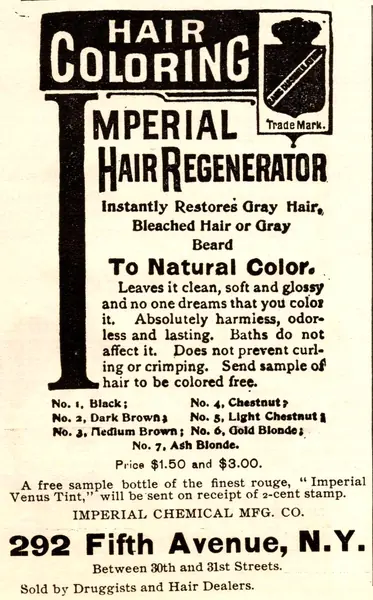
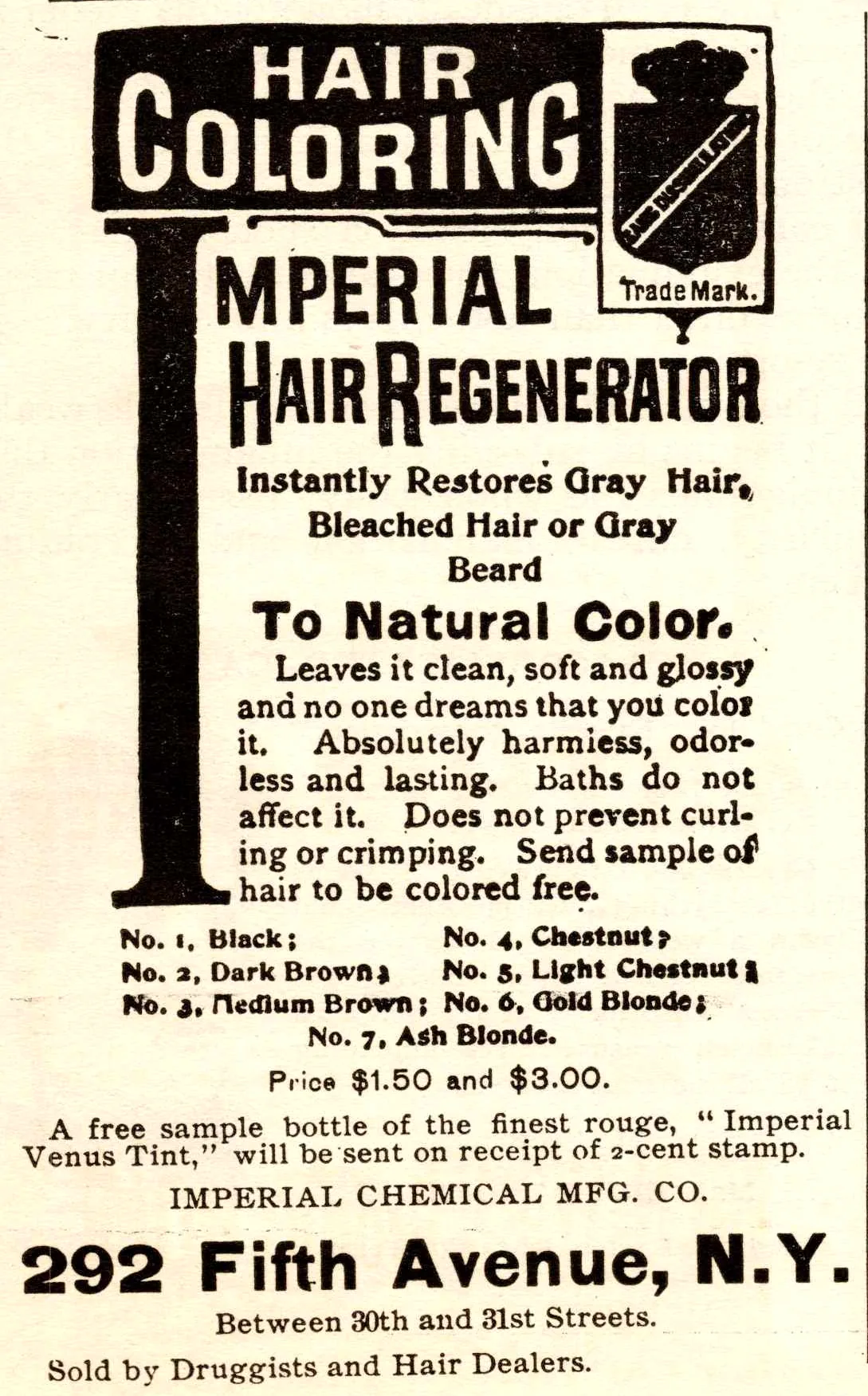
The 1895 hair ads are announcements. They state a claim, give an address and stop. Imperial Hair Regenerator, sold from Fifth Avenue for $1.50 and $3.00, restored gray hair “to natural color” and listed its seven shades, from No. 1 Black to No. 7 Ash Blonde. Readers could mail in a lock of hair to be colored free. It is practical and almost bureaucratic.
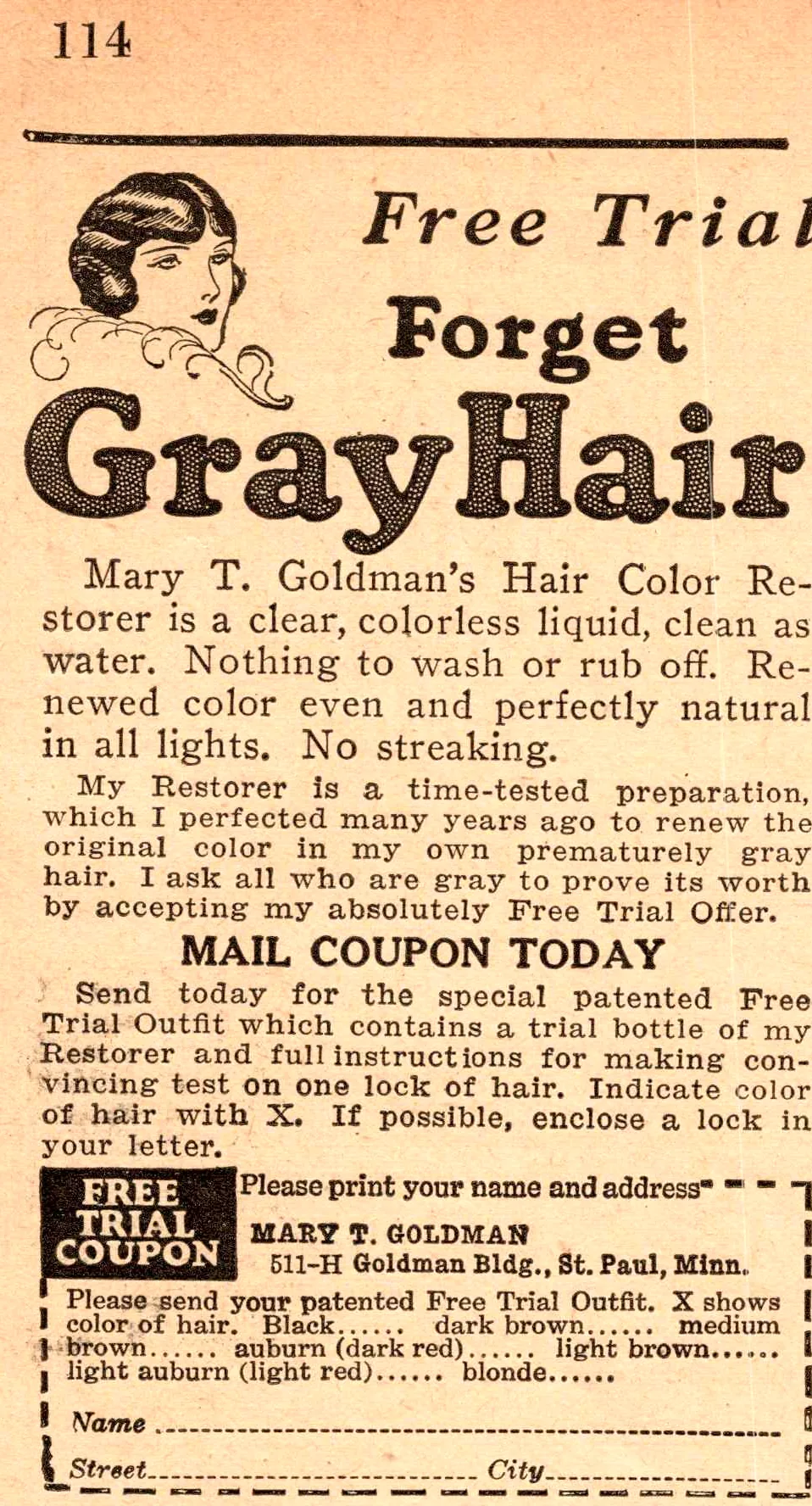
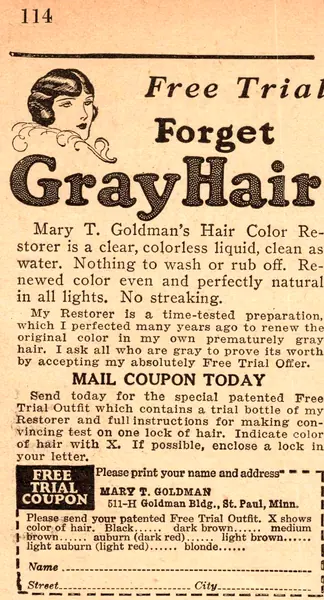
By 1925, hair color had become a matter of feeling. Mary T. Goldman of St. Paul told women to Forget Gray Hair, and sold her restorer as a clear liquid “clean as water,” with nothing to wash or rub off. The product and the claim were much the same as Imperial’s. The difference is that the 1925 ad sells relief from embarrassment rather than a bottle of dye.
The science of the 1920s
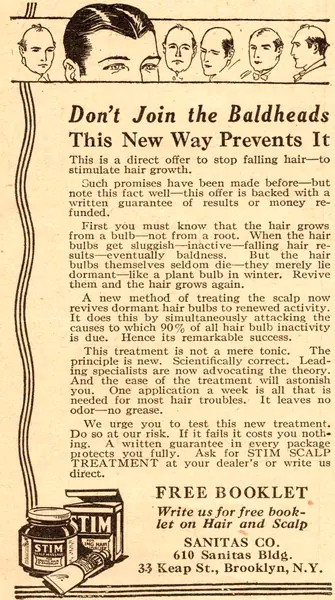
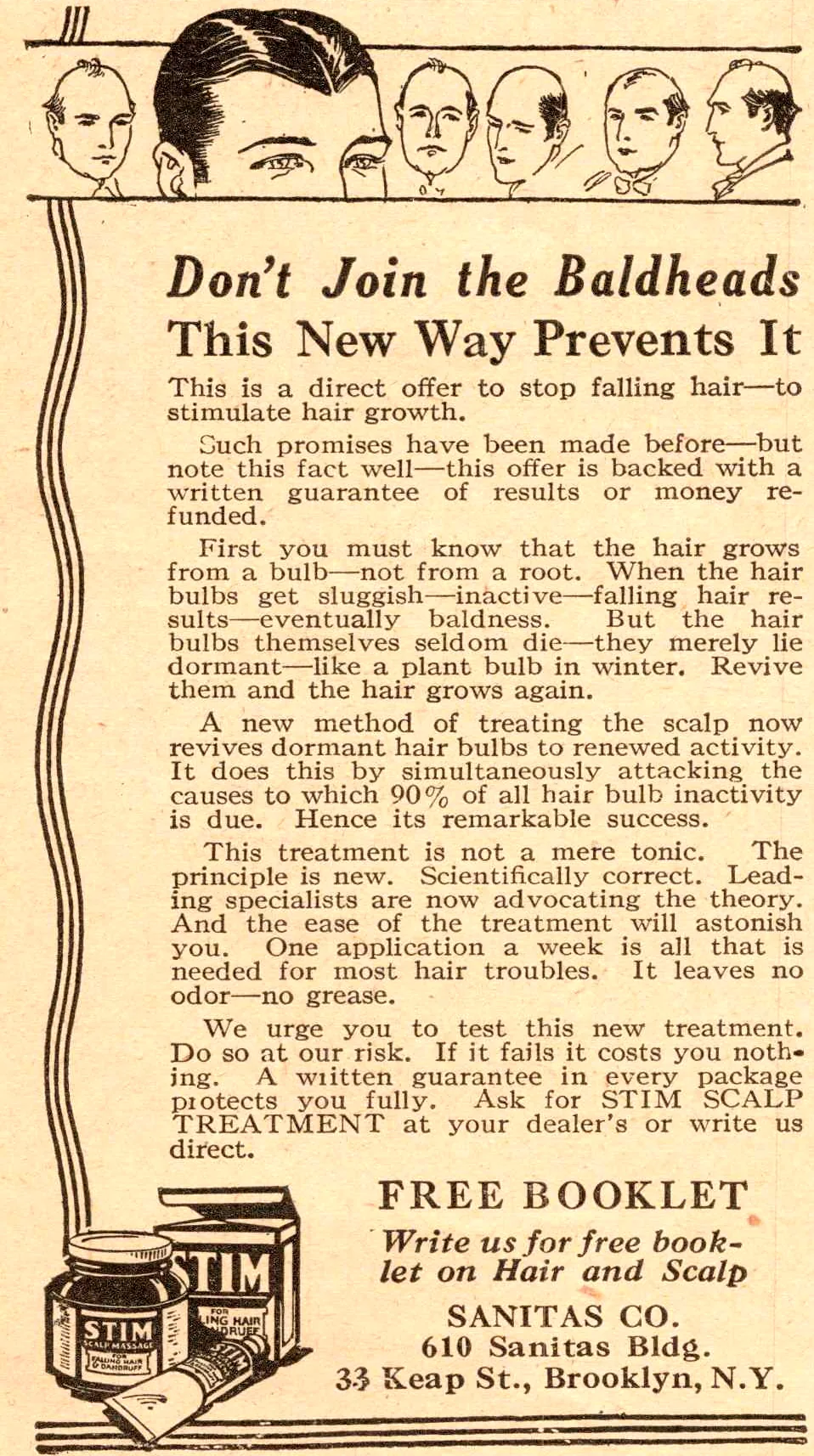
The 1925 ads lean hard on science, or at least on its vocabulary. The Sanitas Co. of Brooklyn headlined its Stim Scalp Treatment Don’t Join the Baldheads, over a strip of balding men’s heads beside one young man with a full head of hair. It anticipated the reader’s doubts directly: such promises had been made before, it admitted, but this one came with a written guarantee.
First you must know that the hair grows from a bulb—not from a root.
Sanitas Co., 1925
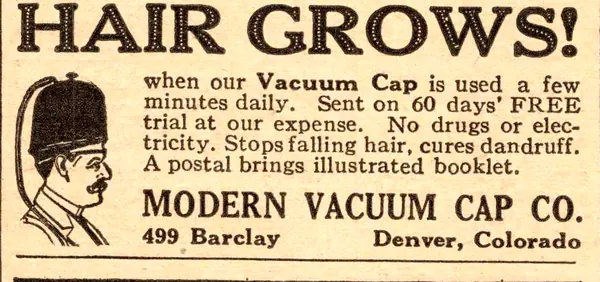
Bald men’s hair bulbs, the ad explained, seldom died. They “merely lie dormant—like a plant bulb in winter,” and a new treatment could wake them up. A Denver firm, the Modern Vacuum Cap Co., took a mechanical approach. Its cap worked by suction, needed only a few minutes a day and used “no drugs or electricity.” It was sent on sixty days’ free trial. “Hair grows!” the ad announced, as if the matter were settled.
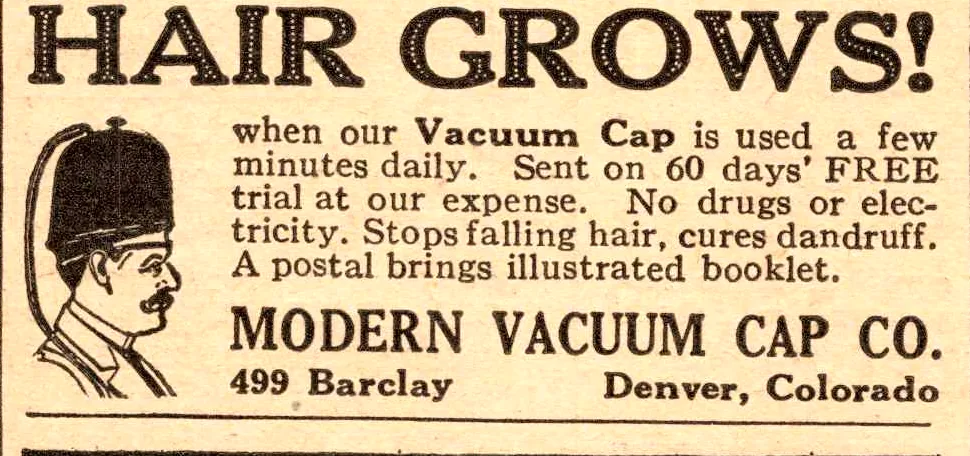
Mechanical hair growers were not new in 1925. Vacuum caps had been sold since around 1900, on the theory that suction would draw blood into the scalp and feed the roots. The American Medical Association, which set up a department to fight health fraud in 1913, kept an Evans Vacuum Cap sold by a Modern Vacuum Cap Company in its collection of quack devices.56
Alois Merke’s ad also ran far beyond Physical Culture. The same promise of new hair in thirty days, the same “dormant” roots and the same Fifth Avenue coupon appeared in movie magazines such as Picture-Play and Screenland, under the name of the Allied Merke Institutes.7
None of these products could do what they claimed for the most common kind of hair loss, which is hereditary. Doctors call it androgenetic alopecia, and it affects an estimated 50 million men and 30 million women in the United States. It runs in families and is tied to androgens, especially a hormone called dihydrotestosterone, acting on the hair follicles. The follicles are not killed outright; their growing phase gets shorter, so each new hair comes in shorter and thinner, and replacement growth slows.8 That gives the ads’ “dormant bulb” a grain of truth, but no scalp treatment, cap or tonic of the 1920s could reverse it. Federal law did little to stop them in either year.12 The Pure Food and Drugs Act of 1906 required truthful labels, not truthful advertising, and it did not cover cosmetics; when the government won a case over a label, a maker could simply move its claims into its ads. Clear federal power over false drug and cosmetic advertising came only with the Wheeler-Lea Act of 1938. The first drug the FDA approved for male-pattern baldness, minoxidil, sold as Rogaine, arrived in 1988, and the second, finasteride (Propecia), in 1997. Both work for some men, and neither works for everyone.39
The other half of the hair business
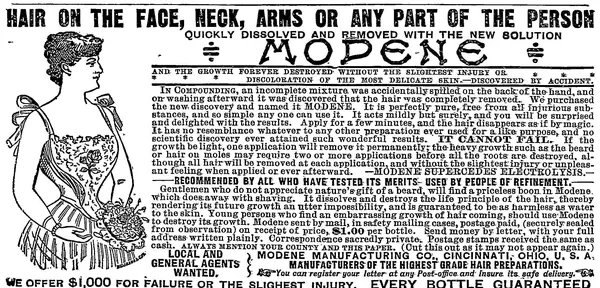
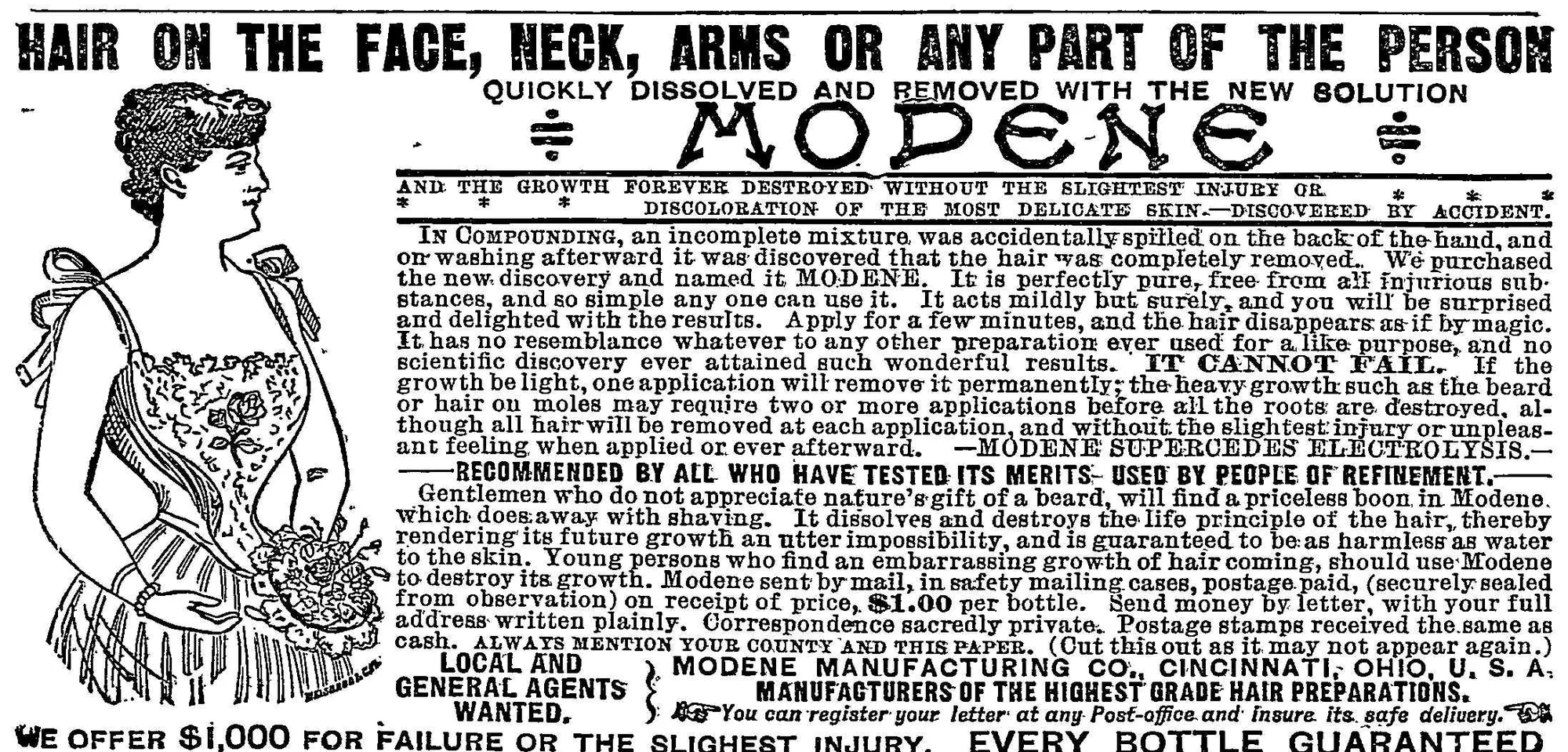
The same magazines that promised hair to men promised to remove it from women. In 1895 Modene sold a solution that it said had been “discovered by accident,” when a half-mixed batch was spilled on a hand and the hair washed away with it. The company offered $1,000 for any failure or the slightest injury.
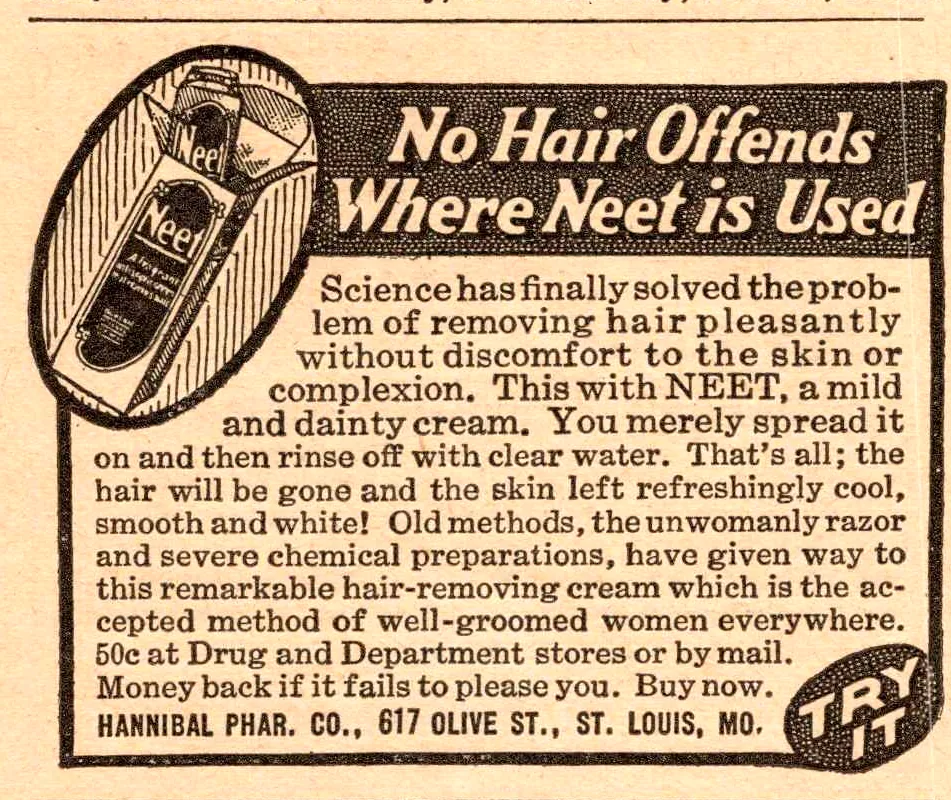
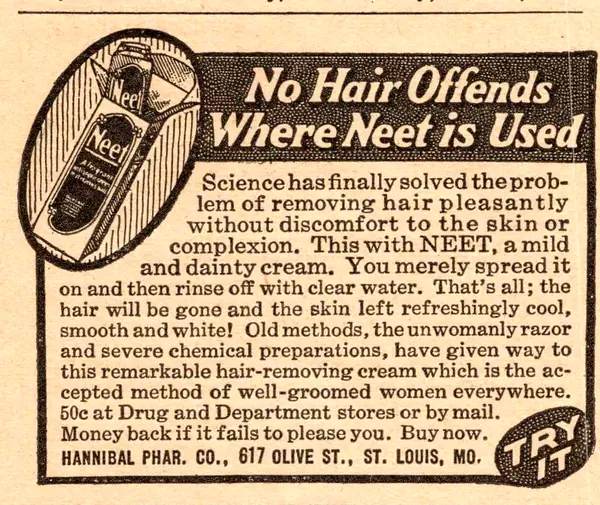
By 1925 the tone had softened into a gentle, scientific calm. Neet, from the Hannibal Pharmacal Co. of St. Louis, was “a mild and dainty cream” that you simply spread on and rinsed off. No Hair Offends Where Neet Is Used, read its headline. That single word, offends, says a great deal about how the 1920s advertising business had learned to sell: first make the reader self-conscious, then offer the cure.
What changed, and what didn’t
| 1895 (Munsey’s) | 1925 (Physical Culture) | |
|---|---|---|
| Size | A column-wide strip or small box | Up to a full page |
| Picture | Usually none | Photographs: a man with a hand mirror, a row of balding heads |
| Headline | A label: “Free to Bald Heads,” “Hair Coloring” | Talks to the reader: “Don’t Fool Yourself!”, “Don’t Join the Baldheads” |
| Proof | The seller’s word | Testimonials, a “Proof” box, written guarantees, free trials |
| Science | Little or none | Bulbs, roots, “dormant” follicles, suction |
| Response | Write to an address; send a lock of hair | Clip a coupon for a free booklet or a free trial |
| Emotional appeal | Practical: stop falling hair, restore color | Embarrassment and self-consciousness: “No hair offends” |
Set side by side, the two years show the arrival of modern advertising. The 1925 ads have photographs instead of engravings, headlines that speak directly to the reader, coupons, testimonials, money-back guarantees and a confident borrowing of scientific language. The 1895 ads have an address and a promise.
The promise is the part that didn’t change. In both years, a reader who sent off a coupon or a postage stamp was buying hope. What thirty years of progress added was a better way to sell it.
Sources
- 80 Years of the Federal Food, Drug, and Cosmetic Act, U.S. Food and Drug Administration.
- The Administration of the Federal Laws Relating to False and Misleading Advertising, Garland S. Ferguson, Federal Trade Commission, 1940.
- This cutting edge hair loss treatment is a repurposed drug from the 1990s, Associated Press, 2025.
- Munsey’s Magazine, The Encyclopedia of Science Fiction; Bernarr Macfadden, Wikipedia.
- Jorie Braunold, “How Pseudoscience Generated US Material and Device Regulations”, AMA Journal of Ethics, September 2021 (Evans Vacuum Cap; the AMA’s 1913 health-fraud department).
- “You Needn’t Be Bald”, The Quack Doctor (history of vacuum-cap patents, 1898 onward).
- Allied Merke Institutes advertisements in Picture-Play and Screenland, 1925–26, via the Media History Digital Library.
- Androgenetic alopecia, MedlinePlus Genetics, U.S. National Library of Medicine.
- “Androgenetic alopecia: pathogenesis and potential for therapy”, Expert Reviews in Molecular Medicine, 2002 (finasteride and minoxidil as the two treatments shown to work, with variable results); Finasteride Tablets for Hair Growth, Clinician, 1998.
- The advertisements discussed are in this archive: Altenheim, 1895, Merke, 1925, Imperial, 1895, Goldman, 1925, Modern Vacuum Cap, 1925, Modene, 1895 and Neet, 1925.